
It has been a long time since my last blog. While there is a feeling of global static, there have been many silent upheavals. I have been scratching for thoughts, when a dear friend of mine sent me recitation of a poem called- ‘Abani Sir’. Like most acts of creativity originating from the hinterlands of Bengal, it is a heartbreaking tragedy. Telling the story of an octogenarian school teacher, who in his heydays taught with pride. Taught values more than materials from syllabus. Taught more about the inequalities of the world. Collated world literature in his bid to explain science. He shunned materialism. Bengalis have traditionally chosen financially non yielding art, culture, philosophy, politics (of course) and last but not the least ‘religious liberalism’ in the footsteps of Chaitanya, Ramkrishna and Vivekananda.
The poem narrates the dinosaur like existence of ‘Abani Sir’ in a decadent society, where lumpen capitalism had overtaken a value based society. The students of ‘Abani Sir’ are either NRI or office-clerks with mediocre aspirations. This description of the generations of Bengali educated class over the last three decades unwittingly has captured the current state of this hinterland, which once took pride in its intelligentsia, icons and distaste for materialism.
‘Abani Sir’ was asked to vacate his property by the goons of real estate developers, now respectfully called the ‘syndicate’. He remained rooted in his heritage, tradition and unflinching avoidance of materialism and paid the price. His house was burnt down and he lived the rest of his life in a dilapidated place in a ‘locked in’ state of mind, as narrated in the poem. And the poem ends with a few lines from Tagore as the only go-to respite for all Bengalis, from Mamta to ‘Aam Janta’. The lines from Tagore seek punishment from the almighty for the untold sins of the generation.
While the name ‘Abani’ is synonymous with all heartbreaking narratives in Bengali, the reality struck me good and hard, when I tried typing the name ‘Abani’ on my iPad. Every time it autocorrected to ‘Ambani’. This in an obtuse metaphor, which exposes the reality of the day. Whether you like it or not, ‘Abani’s of yesterday are taken over by ‘Ambani’s of the day. Like it or not, a society cannot survive in a ‘locked in’ state abhorrent of wealth. In the process you loose your art, liberalism and culture, which doesn’t survive as an abstract concept in a capitalist world.
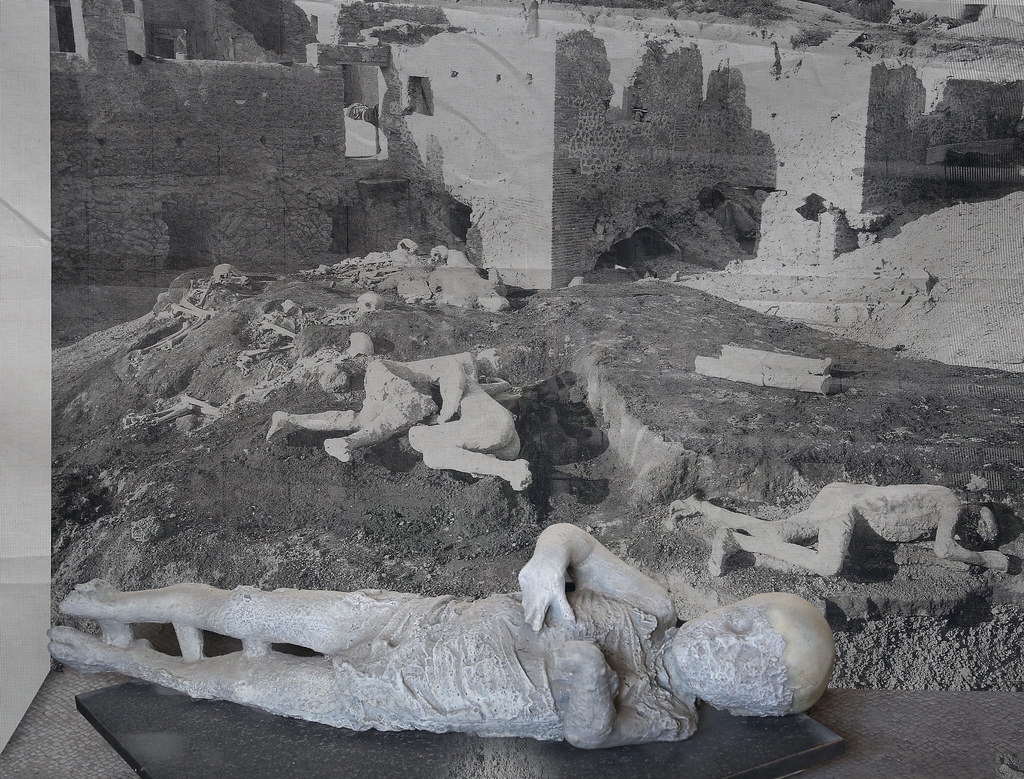
Even though I have lived in Bengal for only a third of my life, I have been rooted in this abstract non-materialism for too long. The longing for values of idealism in isolation, in a world of materialism leads to loneliness in the extreme form. ‘Idealism’ is a philosophy based on expectations. The expectation that the right things would be done and the ‘right’ would prevail if you do no wrong. ‘Materialism’ on the other hand doesn’t expect, it executes. Often ruthlessly without consideration of the harm it’s causing. Idealism often gets entrenched in inaction and is engulfed by Vesuvius. When the flight circles over Kolkata or the car drives along the roads of Kolkata, it looks like time has stopped several decades back. It brings back memories of ‘Pompeii’. Every creation coming out of erstwhile Bengal in the 60s and 70s, talked of despondency but ended with a ray of hope that-the change is around the horizon. But ‘Abani Sir’ portrays the undisputed ‘locked in’ state of the current inhabitants of this once glorious past.
The lack of aspiration is reflected in the current state of degeneration and lawlessness. The reality is that you need to yearn for a better tomorrow. Idealism doesn’t survive within mediocrity. Bengalis who aspired have left it’s shores, leaving the languishing lot to succumb in its non aspirational existence. Creating wealth is a crime as judged through the lens of Bengali middle class. Sukanta Bhattacharya and Ritwik Ghatak died of poverty, which is a cause of celebration for Bengalis. Nazrul Islam was in a true ‘locked-in’ state before his four decades of creativity in often penniless existence. He captured the psych of the Bengali when he wrote-
‘ Poverty has bestowed greatness upon me/ Destitution be my destiny.
In the blind worship of Tagore, the Bengalis forget that he was probably one of the few rich Bengalis of his time. He used his wealth to travel abroad, lobby for himself, make the language and its wealth-recognised globally. And finally create the educational hub of his dream. If he had languished in poverty and died young, Bengalis would not have enough to drown in their cultural abundance.
The phrase ‘poisar gorom’ ( pride of wealth) is a very popular in Bengal, where people who are more wealthy are looked down upon. The dislike for’Marwaris’, who have made Bengal their home, stems from the inherent arrogance to abhor wealth. I wonder if it is the lack of it or the inability to create wealth, which makes the average Bengali so insecure of their Marwari counterparts. They often forget in their snooty and irrelevant existence that there would have been no Satyajit Roy without R.D. Bansal. In our family for example, a PhD was a must if you were not a doctor or an engineer. Someone with a PhD and no productivity will still sneer upon someone who is less educated but makes wealth and generates employment. The average Bengali would spend more time searching for the right breed of fish in the morning and raising storms over several cups of tea in the evening, ignorant of his inconsequential existence. Unless the cultured Bengalis can learn as to how to generate wealth from their ‘ less cultured’ neighbours, even Tagore can’t be born again and save their existence.
Wealth is equated with guilt in Bengali educated households. Wealth can be equitable. Lack of it is not. I have personally succumbed to such unrealistic idealism. I lament the current state of healthcare and education! But mere lamenting about it doesn’t set it right. I have failed in generating wealth, fortune or the right avenues to create the alternative model which I dreamt of. Aspirations alone can only bring you this far. If I cannot hold a mirror in front of my failures, I will probably continue to justify the failures masquerading as some act of idealism. Creating wealth is not a selfish act, it entails a lot of sacrifice for the beginner. It requires guts and courage to accept failures as they come. Just as it takes to stand up to the wrongs committed by the strong and powerful. If idealism has to survive it needs wealth. I have failed unequivocally in accepting those chances and realise my dreams. In real life, there’s no free lunch. You have to fund your own dreams. My personal failures in transforming idealism without creation of wealth should be a clarion call for the next generation. Let us not succumb to the loot in the garb of ‘compassionate capitalism’. Otherwise ‘our idealism’ would perish under the brutal assault of those who built wealth and power without ‘our dreams’.
If ‘Abani’s have to be the new autocorrect, they have to become ‘Ambani’s first. Otherwise we have seen the end of ‘Abani Sir’.
 A Doctor's Dairy
Searingly honest, insightful
LikeLiked by 1 person
Quite deep and a good read!
LikeLike
I’m at a loss of words where deep inside me I can feel words screaming to come out. My subconscious is telling me that this was always in my mind but I never looked inside and introspect. I hope to sit in front of you someday and listen to you about a topic that is also close to my heart. Until that day comes, these words will keep resonating in my mind Dr. Chakrabarti Sir.
LikeLike
Very honest and true from the core
LikeLike
First time I read this blog nice and feel proud
LikeLike
So well analysed and so rightly put.!The inclusion and the exclusion of the letter ‘m’ does make a lot of difference in reaching out to your goal.
LikeLike
It serves as a call to action, urging inspiring all of us to find a balance between idealism and materialism, and to recognize the importance of wealth creation in driving positive change. A great read and my regards to the author .
LikeLiked by 1 person
It serves as a call to action, inspiring all the readers to find a balance between idealism and materialism, and to recognise the importance of wealth creation in driving positive change. My profound regards to the author.
LikeLiked by 1 person