
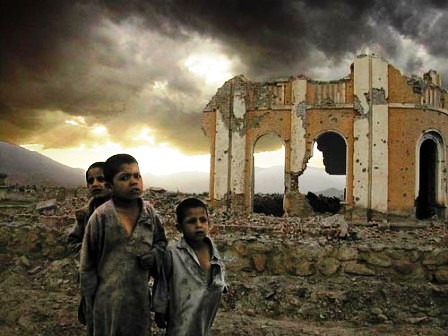
It was a rather warm day in February. The ordinarily dusky skies of Delhi looked even duskier. I was worrying as usual about a couple of patients who were not doing as well as expected. A knock on my door announced the entry of a young Afgan boy, barely 5 years old, along with his older brother in his mid-twenties. They both looked tired and ragged. Our coordinator told me that there’s a middle aged lady accompanying them. Who is she- I asked. The interpreter! The brother looked anxious and lost. He was speaking to the lady in an agitated manner. I felt like an outsider amongst the three of them. Trying to exchange a smile with the little boy, I asked the lady if I could be briefed as to what the problem was!
I was told that the brother wants to know the cost of the treatment! What treatment? For whom and why? Calm down! Tell me what’s wrong first. After a long deliberation I gathered that the child was diagnosed with Aplastic Anemia and has been advised a bone marrow transplant from another hospital. Now they are out to find the cheapest one!
Over a period of time I have come to realise that Delhi is a hot spot for medical tourism. The private hospitals are like showrooms in a mall- the doctors are the decked up mannequins. The tourists come shopping for the cheapest option- not necessarily the best. They have their tour guides. Some in the form of fashionable healthcare solution providers, some are their fellow countrymen who are making a living out of this.
In due course, I gathered that most of the ailing population visiting India for treatment of blood cancers, aplastic anemia and BMT are from the war-torn countries of Iraq and Afghanistan. Some of the hospitals in the national capital have designated themselves as the destination for these hapless patients and their relatives. I had wondered why so many Afgans and Iraqis are turning up for BMT! Have they always suffered from such diseases like blood cancers and aplastic anemia, or is it after the Americans decided to civilise these countries with drones and bombs?
The little Afgan boy with aplastic anemia was my first encounter with medical tourism. I didn’t know then and nor do I know now how to treat a tourist different from my neighbors! We went all out to help the boy get a transplant. Not able to communicate and always worried about the bill, the plight of the brother hurt us all. Much to the dislike of many, we started generating funds for them. Fortunately all went well and my little friend was discharged. We tried explaining to the brother that this is where the treatment actually begins in BMT, its not the end.
Maybe by this time, he had started having a little faith in us! He told me that he has only a couple of hundred USD left and he needs that to go back as well. The enormity of the suffering of an entire nation dawned on me, slowly but surely. A country torn apart by war. Greed for oil. Greed of the richest nations have shredded the ordinary Afgan and Iraqi into cripples, diseased or if lucky, just dead. The brother told me in broken Hindi- a language he learnt in the past few months in order to survive. He told me that most children of his village and adjoining ones are dead or dying of similar illnesses. There’s no medical help apart from Kabul which is a five days journey, if they can manage public and private vehicles seamlessly. When he saw the fate of other children, he grasped his brother in his arms, picked up whatever money he had left and headed for Kabul. When he reached Kabul, worn, torn and tattered, he was told that the hospital can’t treat this condition. Go to India or Pakistan- was the saintly advice given to him.
That is when I learnt that Afgans largely hate Pakistan for their hobnobbing with the Taliban as well as the USA. So he headed for India without really knowing what to expect! Surprisingly enough, he met several fellow Afghans on his exit from the airport. They were there to welcome their fellow countrymen. Wow! He was home at last. Little did he know that his own people have turned into hyenas waiting to prey on their own kind. He was taken on a trip to one hospital after another until he was rescued by this middle aged lady.
He was in tears when I told him that if he goes back right now his brother might die of infection on the way. All the precautions and the diligent care that is involved was explained to him. He had started trusting us by then. He no longer thought it was a ploy to squeeze more dollars out of him.
Most of the administration was not ready to believe his sob story. It’s a ploy not to pay the medical bills- I was told. The next two months of his treatment was largely on our own. When we felt my little friend and his brother were ready to leave for their home, we asked him if he will manage to take care of his brother! His eyes gleamed with both joy and sorrow- the like of which I had never witnessed before. They were the only ones left of their family of ten. They have to survive for each other.
The child had a central venous line which he refused to have removed. We tutored him rigorously on how to take care of it. In seven days, I could see that he was doing it better than most of our nurses. Just like they had appeared, one hot and sultry day in June- they left. I tried imagining their journey back. Five days through the deserts, hills and land mines, will they reach ——-!
War is for the ones who can afford to live through it. Bombing countries far from their mainland to become richer as a country and as individuals! The Americans are made to believe they’re safer by bombing Afghanistan and Iraq. We in India, are picking up the bits and pieces left of the holy crusade. Bits and pieces in the name of medical tourism. Filling our backyards with the preying hyenas to bring us the loots from their own country.
Did WHO, UNICEF and other big ones take an account of the war in Afghanistan and Iraq? Did we ever ask why there is a surge in deadly cancers? How many of these lives are we saving in the name of medical tourism! Why bother? Make hay as the sun is still shining!
After a few months, I had called up the fine lady to find out about our little friend and his brother. I was shocked to hear that their village was bombed again and there was no news of them. We, as doctors are taught to be emotionally unattached with a patient or their family. Are we really not supposed to feel the pain of a loss- loss of a patient, we have struggled to cure for months or years! I could not bear to absolve myself of the pain that day. I remembered that my little friend never spoke to us directly. He just smiled. Smiling through all the pain- the pain of loss of his mother and five brothers in one night of American victory. The pain of his disease probably paled in comparison.
In the busyness of a demanding professional life, memories fade and the ones which hurt, fade further. A year had gone by and I was learning how to survive in the midst of the lust and lure. A knock on the door is not an usual practice as most people barge in, unannounced. So when there is a knock, I look expectantly for a friend or a cup of coffee. This time, on a more pleasant February morning, I looked up to the knock on my door to see the smiling faces of ‘my little friend and his brother’. Was I dreaming! I got up from my chair and asked- A—–////, – is that you! The heavenly smile spread from one ear to the other. I took him in my lap and ran out announcing to the world that my friend was still there, well and healed.
His brother had taken immaculate care of the central line. It was as perfect as my little friend. I couldn’t help but ask as to whether his village was bombed and how did they manage to survive. He told me that it was his sheer luck that he could never reach his village when they returned. Roads were blocked-some destroyed and the rest at the mercy of the mercenaries. They stayed at a place closer to Kabul. He said with tears in his eyes that the bomb would have killed the rest of the kids in his village, who were anyway dying of these deadly illnesses. No one kept a count. This is not war crime- it’s a victory of the rich and mighty over the poor and suffering. And we the hyenas are there to feast on the pieces left behind.
Whilst we take pride in being a destination for medical tourism, the story which will never be told has to find its way. If I pick up a piece, I try to find the other pieces and why not put them together. Those who lived through the war are silent witnesses to the thousands who did not. Enough of human lives have been lost, let’s not loose humanity or whatever is left of it. Let’s not just pick up the pieces, it’s time to put them together.
 A Doctor's Dairy
I am overwhelmed by the response I received to my last blog. I believe it touched a cord in one and all who feel that a lot of people are suffering in oblivion. Someone should speak for them.
LikeLike
True feeling of a Physician
LikeLike
I am speechless
LikeLike
Another beautifully written article clearly showing the heartache the author feels at the helplessnes of the sick, and those that cannot afford treatment. It also exposes the weak underbelly of the medical system worldwide; this especially gets exposed when treating these powerless victims,.and whenthe nefarious “middlemen” ,for whom he plight of the patients is merely a vehicle for enrichment.I salute the author for having the courage of his convictions, and putting them on paper.
LikeLike
A heart-rending write-up. An eye opener for many issues that happen behind the scene of which we are oblivious. A laudable effort on the part of the author to bring them to the forefront. Someone HAS to speak. And it is on us to support the courage that is needed to lay bare the facts.
LikeLike
I have no words to express the awe that I personally carry for the author..
The true picture of the medical system globally cannot be better described.
Let us hope that the heartache felt by the author initiate a revolution in the medical system..
LikeLike
True and from core of your heart! As I know you personally for over two years now, I know how each and every word is true! Sadly, only few people are bothered to even think or to try correlating war and aplastic anemia or leukemia! It should be a matter of thought and concern.
LikeLike