An Ode To The Friends Who Have Humbled Me Forever

Image result for humility"

With my teen-years in the bloody 70s and the early college days in the sloganeering 80s of Kolkata, the world seemed loaded against the common man (and it still is). Convinced by the radical portrayal of conventional education as a means to submission, I had little desire to embark on post-graduation in medicine. Travelling to the god-forsaken areas to provide medical aid had its share of romanticism and charm to the young mind. Every moment, we were reminded that the big brother was watching us and an avalanche of revolution was on its way, to build a new world order. Whilst, I was happy surviving in this mythical world, I found an ardent fascination for solving clinical mysteries. Reading the ‘Harrison’s Textbook of Medicine’ enthralled me as much as the literature born out of the burning decades that preceded us. I was mesmerised by the moving blood cells in our body, something we could touch and feel, sieve and see, store and grow. My choice was made simple at the age of 20; I wanted to know more about the blood cells- why they do, what they do, why they go rogue and why they die unannounced! The world of blood cells had befriended me 30 years back and to date remains the most loyal friend; my first true love who gets more beautiful with each passing day, enchanting me with its unknowns every day of my life. You have never let me boast of my knowledge, as I know nothing of you yet, my friend.

I landed up in JIPMER, Pondicherry for MD in Pathology, in my quest for the study of blood cells- i.e. ‘Hematology’. A wonderful institution, the like of which I had not seen in the troubled waters of Kolkata. I had my first 6 months in Hematology or the study of blood, as I had wished. Looking at those tiny tots of red, white and yellow cells and figuring out the illnesses, was mind blowing for me. I often quoted the “Harrison” in academic sessions, much to the ire of my seniors in pathology. When I saw the blood works of a patient, I wanted to see the patient. This was thoroughly disapproved by the guys practising clinical medicine. I did not understand the egoes, the paucity of intellect which segregated the study of blood cells in the laboratory and the clinics. I shall leave this discussion for another day. But, the six months of paradise came to an end and I was posted in the heart and soul of pathology ie, anatomical pathology. A brief background of my tryst with anatomy would be helpful in understanding what happened next.

As medical students, we had to buy human bones, a set of instruments for dissecting the human body and a white coat-the pride and prestige of a ‘would-be’ doctor. In batches of 20-30, out of some 100-odd students, we marched to each unclaimed or donated human body. Cutting through skin and muscles, tissue and organs with the big fat ‘Grey’s Anatomy’ lying by the side. It took me seven days to decide that I needed to make a run. Far away from the glory of the gory human anatomy. The classrooms never attracted me. I willed away forming our own cricket team and daring the seniors to beat us. With very little contribution from me as a player, apart from the semis, we reached the finals, only to lose. But, I had made good use of time away from anatomy, making friends with guys and girls from other colleges. They remain good friends to this day.

Thankfully, attendances were not compulsory to sit for an exam in those days. We had three major exams at the end of each 18 months session. The first one was drawing near. My childhood friend, who was brilliant in her studies, Dr Sudeshna Bose (aka Sue Bose in the University of Arizona as an elite Neurologist), gave a good kick on my backside to make me realise that the good days are over. She is still there to listen to my woes and remind me of my responsibilities. I have no doubt that if she had chosen her career path without family commitments, she would have been the best in her field. Now, with three months left for the exams, I had no clue what to do. I knew the human body no more than the guy next door. All these days, I had run away from sessions of boring theory of physiology and the so called practicals where banging frogs on their head was the most we learnt. It was high time, my crazy and rebellious self had to see sense in all that, to remain in mainstream education.

In a bid to orient myself, I crept in the biochemistry class for the first time, with just 3 months to go for the exams. Little did I realise that Dr Moitra who was lecturing was a stalwart of his time. But in 15 minutes, I fell in love with the subject. The next three months were totally invested in Biochemistry and this makes me stand in a good stead, even today. I got a grasp of physiology through my study of biochemistry alone. But, none of it would help the study of human anatomy. Thankfully, the market was loaded with abridged text books of anatomy, which were good for passing exams. I slotted seven days of my life to anatomy. That’s all I needed to pass the exams, never to look back at it again. So, you know it now! See me with a knife in my hand- make a run for your life.

Joydeep (Bhaumik), was my first friend in college and remains to the day. He had arduously learnt the craft of using the knife on a female body (gynecology). He can still win over females with his simple charm, without having to use a knife. Unassuming, yet passionate, he lost himself a bit in the doldrums of life. The Joydeep that I knew, would have found ways to save the life of mothers and their unborn child with his innovations. He would have developed technologies for the less fortunate, not sell technologies for the rich. He would have inspired me to move out of the greedy corporate world and find our salvage in some forlorn corner of the country. We have both failed our dreams, our passion and our worth in the profession.

The college days in Kolkata, were traumatised by political polarization. It still is the emblem of ailing Kolkata and is the reason, why the world has stopped a century back, in the narrow streets of West Bengal. Despite that, I have managed to reunite with some of them after several decades. Chaitanya (Dr C. Chatterjee) has a grand orthopedic practice in North Kolkata. He was the one who introduced me to student politics. With his big dreamy eyes, he always spoke from his heart. Never, for once did I feel that he was lying, when he spoke with that passion in his eyes. He felt betrayed and fooled like any of us, when the utopia we grew with was realised to be an illusion. A ‘hallucination’ for the craving mind, craving for a change. Now that we were out of the world of ‘Inception’, I find him warning me of the world around me everytime we speak. A friend who knows your achilles heel and protects you forever.

Moushumi (Mukherjee), who all the guys in college admired without fail, is a good friend of mine. Largely because her son Aritro, who bonded with me like no one before. Aritro is different than all of us. He does not manipulate, he is not selfish, he cannot wish to usurp something that does not belong to him. Even though, we met only a few times, Aritro always hogs a part of my consciousness. I am scared to meet him- my fear remains, what if I fall in his eyes. What if I have become selfish and manipulative in the last 10 years, which will not allow us to bond like before! Aritro-you remain as you are-forever and more! You shall remain a shining star in this clouded world and let us ordinary ones perish in our subliminal existence.

Now, friends, you can imagine myself as a postgraduate student of pathology, having to enter a mortuary- to cut open a human being, fresh from death. I had to make my second run. My another trusted friend for life, Dr Narayan Banerjee was studying Internal Medicine at the Post-Graduate Institute of Medical Education and Research (PGIMER), Chandigarh. The most coveted place for post-graduate training, both then and now. He used to send me forms for the entrance exams which happened twice a year. I never used to open them. For one, I thought it was a land of dreams, where only 1% of the applicants ever got through. Surely, it was not for me. Second, it was too much trouble. I had developed a good friend circle at Pondicherry. Ronita (aka Dr Ronita Mazumder) was studying anatomy. But it was a friendship despite anatomy, starting with her frequent invitations for tasting the chilly-chicken she cooked so well. For her, the darkness we see is only a wait for the sun to shine. The friendship lasted forever and to date, she remains the most trusted and loved friend, who would always ignore my flaws and remind me what I am good at. Even when, I am not ready to believe in myself. And there was Abhijit, a bong from Ranchi, who excelled in storytelling. I was newly married and he spent more time with my wife telling his stories in his own unforgettable way and no wonder, my wife preferred scooter rides with him than me. Burmanda and Anilkumar, from Tripura and Bangalore were my other buddies, who I have lost touch with. We used to spend midnight at tea-stalls across the hospital, drive to the beach, eat at lovely joints and what more did you need!

Each one of them, including my wife, pestered me to try for PGIMER, Chandigarh, which to me was beyond my reach. An Aishwariya, Julia Roberts or Audrey Hepburn. Nonetheless, I resigned from MD in Pathology and ventured for PGIMER, Chandigarh. No harm in trying to fly! What is the worst thing that might happen- fall and break a bone or two? One fine morning in the winter days of December, we landed at Chandigarh. My friend, Narayan, left his own room for my wife and me to study for the next week or so, before the exams. He taught us the tricks of the trade called writing the exams. Unassuming as he was, and still is, he denounced the glory of pursuing a DM in Cardiology and returned to Kolkata after passing his final exams of MD (Medicine). There was a shade of sorrow in his eyes, but he had to abide by the demands of his family. A true ‘Kolkatan’ at heart, Narayan worked tirelessly and established himself as the best clinician in Kolkata- in 5 years time. I still get calls from far and near, to arrange an appointment with him. Despite his stature, he still obliges unflinchingly. He looked after my parents for over a decade through their illnesses, until the end. No wonder, he is still so humble after establishing a 200 bedded hospital and running it successfully for over a decade. Narayan has healed the rich, the poor and the not-so-poor with the same passion. He is not detached from the days when he used to travel across North Kolkata in a rickshaw, with a stethoscope and a portable ECG machine. If Kolkata needs an icon, it is Dr Narayan Banerjee and not those, who shed crocodile tears for the poor and maintain their OCI status to avoid the harsh winter in the Europe and USA. But we stupid ‘Bengalis’ have never recognised our heroes, before they have been recognised by the ‘west’. Be happy with your self-annihilation, you ‘Petty Bengalis’-for you have chosen your own path to destruction.

My entry to PGIMER is still laced with disbelief. It’s like entering a land of your dreams- an Alice in the Wonderland. The feelings remain the same for me. In the midst of the suffocating competition to trounce one another, amidst the ruthless work and academic schedule, most of the 13 guys and girl from our batch managed to live in peace. We liked the presence of one another. Sanjeev Saigal, now a great hepatologist and an acclaimed singer was better than me in every possible way, as were many others. Yet, his humility amazes me every time I interact with him. I never would have imagined that he would break the engagement with the daughter of his boss, to marry the girl of his dream. But he did so and remains at awe of Jyoti (Dr Jyoti Wadhwa, an incorruptible medical oncologist), even today.

At the end of 3 years of rigorous but thoroughly enjoyable existence (of MD, Medicine) on ‘anda bhurji’ from chotu, ‘paratha and dahi’ from the bengali mess and tandoori chicken from ‘Tehal Singh’ to the rescue at times of desperation, we bonded thoroughly with each other. Fortuitously, I topped our batch in Medicine and was awarded the “silver medal of honour”, and despite the other guys probably been better than me, all 12 of them had hugged me with the same love that I feel even today. Vineet (Ahuja) is now heading the department of gastroenterology at AIIMS. Rakesh (Sapra) is a renowned cardiologist. Sam (Dr S Lhattoo) is spearheading the field of epilepsy in the USA, as is Sudhir (Ravi) in the field of hepatology. Bonu (Ravishankar) is a renowned nephrologist, who found his newfound talent in music and has always danced his way to glory. Giri (Bhakraj) has made a mark in his home-country, Bhutan. Reddy (RK) is a prominent cardiologist as he always wanted to be. Devika (Rani) is the only one who we have lost touch with. If she reads this by any chance, I am sure she will reunite with the group. They all have tolerated me for 30 years, knowing fully well, that I am a ‘grump’ or a ‘Kharoosh’.

My final tale is reserved for the ones who have held the thirteen of us together, through ups and downs. Their own story deserves a biographical space in itself. Sanjay (Decruz) has lived on in Chandigarh. Currently, he heads nephrology in Govt Medical College. He was engaged to Ruth ( the most beautiful lady I have ever met), during our student days and subsequently married her. I was then in the UK, and Saigal was staying with me, in his early days of UK sojourn. A news reached Saigal, which devastated us all. We prayed, but could never wildly imagine if human beings can survive such trauma. An ill-fated day in the streets of Delhi blew apart Ruth and broken Sanjay beyond recognition. But Sanjay can never be broken and even God had to bow before Ruth. Ruth had to leave her MD (medicine) course due to the tragedy, but she never gave up. Several decades later, with the determination that no human being can ever muster, she completed her MD. Sanjay today smiles at life like he did 26 years back. Ruth, has faced life head-on and never given up. Their son, Rahul is a successful professional. It’s a fairytale that keeps me believing; believing that man can trounce fate, man can rewrite destiny and man can always be happy if they want to be.
War and pieces- who picks them up

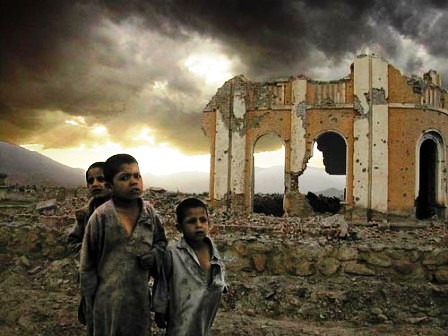
It was a rather warm day in February. The ordinarily dusky skies of Delhi looked even duskier. I was worrying as usual about a couple of patients who were not doing as well as expected. A knock on my door announced the entry of a young Afgan boy, barely 5 years old, along with his older brother in his mid-twenties. They both looked tired and ragged. Our coordinator told me that there’s a middle aged lady accompanying them. Who is she- I asked. The interpreter! The brother looked anxious and lost. He was speaking to the lady in an agitated manner. I felt like an outsider amongst the three of them. Trying to exchange a smile with the little boy, I asked the lady if I could be briefed as to what the problem was!

I was told that the brother wants to know the cost of the treatment! What treatment? For whom and why? Calm down! Tell me what’s wrong first. After a long deliberation I gathered that the child was diagnosed with Aplastic Anemia and has been advised a bone marrow transplant from another hospital. Now they are out to find the cheapest one!

Over a period of time I have come to realise that Delhi is a hot spot for medical tourism. The private hospitals are like showrooms in a mall- the doctors are the decked up mannequins. The tourists come shopping for the cheapest option- not necessarily the best. They have their tour guides. Some in the form of fashionable healthcare solution providers, some are their fellow countrymen who are making a living out of this.

In due course, I gathered that most of the ailing population visiting India for treatment of blood cancers, aplastic anemia and BMT are from the war-torn countries of Iraq and Afghanistan. Some of the hospitals in the national capital have designated themselves as the destination for these hapless patients and their relatives. I had wondered why so many Afgans and Iraqis are turning up for BMT! Have they always suffered from such diseases like blood cancers and aplastic anemia, or is it after the Americans decided to civilise these countries with drones and bombs?

The little Afgan boy with aplastic anemia was my first encounter with medical tourism. I didn’t know then and nor do I know now how to treat a tourist different from my neighbors! We went all out to help the boy get a transplant. Not able to communicate and always worried about the bill, the plight of the brother hurt us all. Much to the dislike of many, we started generating funds for them. Fortunately all went well and my little friend was discharged. We tried explaining to the brother that this is where the treatment actually begins in BMT, its not the end.

Maybe by this time, he had started having a little faith in us! He told me that he has only a couple of hundred USD left and he needs that to go back as well. The enormity of the suffering of an entire nation dawned on me, slowly but surely. A country torn apart by war. Greed for oil. Greed of the richest nations have shredded the ordinary Afgan and Iraqi into cripples, diseased or if lucky, just dead. The brother told me in broken Hindi- a language he learnt in the past few months in order to survive. He told me that most children of his village and adjoining ones are dead or dying of similar illnesses. There’s no medical help apart from Kabul which is a five days journey, if they can manage public and private vehicles seamlessly. When he saw the fate of other children, he grasped his brother in his arms, picked up whatever money he had left and headed for Kabul. When he reached Kabul, worn, torn and tattered, he was told that the hospital can’t treat this condition. Go to India or Pakistan- was the saintly advice given to him.

That is when I learnt that Afgans largely hate Pakistan for their hobnobbing with the Taliban as well as the USA. So he headed for India without really knowing what to expect! Surprisingly enough, he met several fellow Afghans on his exit from the airport. They were there to welcome their fellow countrymen. Wow! He was home at last. Little did he know that his own people have turned into hyenas waiting to prey on their own kind. He was taken on a trip to one hospital after another until he was rescued by this middle aged lady.

He was in tears when I told him that if he goes back right now his brother might die of infection on the way. All the precautions and the diligent care that is involved was explained to him. He had started trusting us by then. He no longer thought it was a ploy to squeeze more dollars out of him.

Most of the administration was not ready to believe his sob story. It’s a ploy not to pay the medical bills- I was told. The next two months of his treatment was largely on our own. When we felt my little friend and his brother were ready to leave for their home, we asked him if he will manage to take care of his brother! His eyes gleamed with both joy and sorrow- the like of which I had never witnessed before. They were the only ones left of their family of ten. They have to survive for each other.

The child had a central venous line which he refused to have removed. We tutored him rigorously on how to take care of it. In seven days, I could see that he was doing it better than most of our nurses. Just like they had appeared, one hot and sultry day in June- they left. I tried imagining their journey back. Five days through the deserts, hills and land mines, will they reach ——-!

War is for the ones who can afford to live through it. Bombing countries far from their mainland to become richer as a country and as individuals! The Americans are made to believe they’re safer by bombing Afghanistan and Iraq. We in India, are picking up the bits and pieces left of the holy crusade. Bits and pieces in the name of medical tourism. Filling our backyards with the preying hyenas to bring us the loots from their own country.

Did WHO, UNICEF and other big ones take an account of the war in Afghanistan and Iraq? Did we ever ask why there is a surge in deadly cancers? How many of these lives are we saving in the name of medical tourism! Why bother? Make hay as the sun is still shining!

After a few months, I had called up the fine lady to find out about our little friend and his brother. I was shocked to hear that their village was bombed again and there was no news of them. We, as doctors are taught to be emotionally unattached with a patient or their family. Are we really not supposed to feel the pain of a loss- loss of a patient, we have struggled to cure for months or years! I could not bear to absolve myself of the pain that day. I remembered that my little friend never spoke to us directly. He just smiled. Smiling through all the pain- the pain of loss of his mother and five brothers in one night of American victory. The pain of his disease probably paled in comparison.

In the busyness of a demanding professional life, memories fade and the ones which hurt, fade further. A year had gone by and I was learning how to survive in the midst of the lust and lure. A knock on the door is not an usual practice as most people barge in, unannounced. So when there is a knock, I look expectantly for a friend or a cup of coffee. This time, on a more pleasant February morning, I looked up to the knock on my door to see the smiling faces of ‘my little friend and his brother’. Was I dreaming! I got up from my chair and asked- A—–////, – is that you! The heavenly smile spread from one ear to the other. I took him in my lap and ran out announcing to the world that my friend was still there, well and healed.

His brother had taken immaculate care of the central line. It was as perfect as my little friend. I couldn’t help but ask as to whether his village was bombed and how did they manage to survive. He told me that it was his sheer luck that he could never reach his village when they returned. Roads were blocked-some destroyed and the rest at the mercy of the mercenaries. They stayed at a place closer to Kabul. He said with tears in his eyes that the bomb would have killed the rest of the kids in his village, who were anyway dying of these deadly illnesses. No one kept a count. This is not war crime- it’s a victory of the rich and mighty over the poor and suffering. And we the hyenas are there to feast on the pieces left behind.

Whilst we take pride in being a destination for medical tourism, the story which will never be told has to find its way. If I pick up a piece, I try to find the other pieces and why not put them together. Those who lived through the war are silent witnesses to the thousands who did not. Enough of human lives have been lost, let’s not loose humanity or whatever is left of it. Let’s not just pick up the pieces, it’s time to put them together.

PROFUNDITY LOST -MISSING THE ‘WHOLE’

According to a recent study, over 50 million scientific articles have been published from 1665 to 2009. Every year over 2.5 million scientific articles are being published in recent times. At this rate, we should have uncovered all the mysteries of the human body and the natural environment where we survive. Yet, we are unaware of much of what goes inside or around us. Is it not the right time to ponder over our shortcomings in the scientific world!

I shall focus on some aspects of biological science to illustrate my point. The brilliance of technological advances has gifted us with the ability to tease out the nitty gritty of a human cell to its minutest detail. We can analyse over 15 different signatures inside a single cell by the process of Flow Cytometry. This is now being superseded by Mass Cytometry where we can look at 50 such signatures at one go. The Human Genome Project, the most ambitious scientific endeavour to understand each human gene and its origin. The job of a gene is to finally produce a protein which is needed for bodily function. The same gene which is active in the liver might be silent in the brain, as the brain does not need the same protein as the liver. This is achieved through a biochemical process of methylation and acetylation. It all sounds good until now. But that is where the plot thickens.

There are numerous enzymes doing the same job on different genes in different organs at different times in a perfectly tuned manner to switch on and switch off the functions of different genes. Imagine that some 20,000 genes and some 100 enzymes in constant interplay to keep us going! For those who have witnessed orchestra being played in a giant hall with pianists, violinists, guitarists, celloists and more the merrier- playing in harmony to create a melody with full cognizance of time, rhythm and elegance. Fully aware of individual roles- they know when to start and when to stop, after months and years of training. A single player from the celloists, missing a cue and overlapping on the violinists would disrupt the creation of melody and the harmony would be lost.

The same is happening in the human body every second. It’s the nature’s orchestra. Any disruption in this process ends in disease or dysfunction. Science has been trying to grasp this profundity of nature without showing her the due respect and without admittance of our limitations. Each of us are focussing on one organ and even one cell and diligently trying to figure its mysticism in health and disease. Each enzyme, each protein and each gene would be discovered, reinvented or celebrated and constitute the 2.5 million plus publications. But where is the master-conductor!

Who is sitting down amalgamating the fragments of information and try to give it shape? The scientists have groups- some deal with helper T cells, some with cytotoxic T cells and some with regulatory T cells. They are studying the genetic changes, metabolic changes and doing mass cytometry to get data on as many events going on inside each of these cells. We have several verticals in management terms, working on each cell or even each gene, mostly unaware of what is going on with the others. If you go to an expert on regulatory T cells and ask about some recent discovery on cytotoxic T cells, you will be politely directed to some scientist of the respective lab. This is an act of honesty. Each one is full to the brim with their own work of one cell type, one enzyme, one gene or one organ.

Unfortunately, the human body works on finely tuned interaction between each gene, protein, enzyme and cell. In a focused world where the demand is to scale up the number of publications to climb up the ladder in both academic and business worlds, we do not have the time, will or bandwidth to reflect on our work in the perspective of the ‘whole’.  This is exemplified when someone tries to review the fragments of these findings on a larger scale of an organ or disease. Unfortunately, most infer, in their trueness to science, that there is very little linking the bits.

In the intensity to focus on my house, I have forgotten my locality. In order to further my locality, I have lost the view of my city and thus the country, its people and the world at large. Its time to take a break and reflect- reflect on the profundity with which mother nature has designed each one of us and our surrounding, while we slide down the slippery slope of genetic engineering, the most recent kid on the block.

We had discovered how to combine chemicals to produce plastics. For ease of living. Fifty years down the line, we are realising that we have coated the earth with plastics and can breathe no longer. In the craze of genetic engineering, we are ready to go down the path of unforeseen self-destruction and devastation- irrevocable and irretrievable.

Time-out please. Bow in front of profundity of the nature. Understand and discover the bits as a part of the whole. Be a part-but don’t miss the ‘WHOLE’.

My First Blog Post

Between everything and nothing

I often sit back and ponder how much the earth has revolved on its axis in the last 40 years. What has changed so dramatically in the last four decades! Everything, I suppose or maybe, nothing. Between ‘everything’ and ‘nothing’ lies an emptiness which I cannot fathom.

If I had opted to become a doctor in the late 70s, it wasbecause the tales of both my grandfathers had influenced me tremendously in adialectic manner. My paternal grandfather practised in the district of Rangpur in undivided India (now part of Bangladesh). I was told that he was also anactivist who sought independence from the British oppression and hence spent quite a few years behind the bars on charges of sedition. Whilst he was in the jail, villagers from far and near used to bring whatever grew in their land, tosustain a mammoth joint family of some 80 odd members. I cannot imagine such athing in today’s world where every doctor is looked upon with suspicion; the practice of medicine having degenerated to a transactional contract between a seller and a buyer. He died sad and lonely far away from his place of work,bereft of possession and pride- thanks to the Nehrus and Gandhis of the time.

My maternal grandfather on the other hand was a pathologist,who delved deep inside the human body and discovered many fascinating happenings in human organs afflicted with different diseases. To maintain academic credentials amongst a white majority medical faculty under the BritishRaj was challenging to say the least. His work featured in many noted Europeanjournals of his time. By the end of the first decade of independence, he started losing his faith in integrity of academics and clinical medicine in equal measure. By mid-1960 he took retirement, vowing never to see the face of ahospital ever again. He kept his promise until his last breath in 1986. I spenta lot of my childhood with him, gazing at the enormity of his library, in hisbedroom, listening to his unblemished recital of Sanskrit verses from Meghdutamand Abhigyanam Shakuntalam, split with reminders to pursue a career in mathematics and never to talk of medicine.

I was nurtured amidst two tales of dedication and brilliance in Medicine which ended in despondence, desolation and disillusionment. I preferred to hang on to essence of their lives rather than the bitter endings.This is probably the reason, why I hold on to the same hope I harboured 40years ago. A hope not to see children begging in the streets or dying in scoresunder the pretence of overcrowding and encephalitis.

‘Therapeutic Medicine’ now rests in the backyard of the wealthy and ‘Preventive medicine’ which could reduce the burden of disease inthe poor remains non-existent. Healthcare is a commodity, advertised, brandedand sold to the highest bidder. All at the behest of consecutive governments, who thought it best to outsource healthcare to the private players. Yet, we plough on with the hope that one day we will not have to turn back a child witha curable cancer not because he cannot be treated, but because he has verylittle hope of surviving due to lack of nutrition and sanitation.

This is where my story begins- a little bit of me and theworld around me every day.